
790 AM · 99.1 FM · Nashville
Nashville’s Total Gospel Station
Faith. Inspiration. Music. Community.
Connect with your station
Music, Community & Support
Request a song, connect with Nashville’s faith community, or partner with the station.
Request Line
Have a favorite gospel song in mind? Call the station and make your request.
Call (615) 242-7760Community Connection
Share a church announcement, prayer request, event, testimony, or community story.
Connect With UsSupport the Station
Grow your reach through advertising, sponsorships, and marketplace partnerships.
Partner With Us




What’s on my ballot? Middle Tennessee voter guide for 2026
NASHVILLE, Tenn. (WTVF) — Middle Tennessee voters will head to the polls Nov. 3 to decide statewide, congressional, legislative and local races in the general election.
The ballot will include races for governor, U.S. Senate, U.S. House, Tennessee Senate, and Tennessee House. Some voters will also decide municipal races and a county home-rule question.
Three proposed amendments to the Tennessee Constitution will appear on the statewide ballot.
Statewide races
Tennessee voters will cast ballots for:
- Governor
- U.S. Senate
Constitutional amendments
Every Tennessee voter will be asked to decide three constitutional amendments:
- Constitutional Amendment # 1: Expands the types of serious crimes that could make a defendant ineligible for bail
- Constitutional Amendment #2: Prohibits the Legislature from imposing a state property tax
- Constitutional Amendment #3: Expands rights for crime victimsIn order to pass, constitutional amendments must receive more “yes” votes than “no” votes, and the number of “yes” votes must be more than half of all votes cast in the governor’s race.
Congressional races
Congressional races in Middle Tennessee include:
- U.S. House District 4
- U.S. House District 5
- U.S. House District 6
- U.S. House District 7
- U.S. House District 9
Tennessee adopted new congressional district lines in 2026, affecting districts and voters across the state. Davidson County is divided among three congressional districts under the new map, meaning nearby voters may be represented by different members of Congress.
Tennessee Senate races
The station’s coverage includes contests associated with:
- Tennessee Senate District 13
- Tennessee Senate District 17
- Tennessee Senate District 23
- Tennessee Senate District 27
Tennessee House races
The Middle Tennessee coverage plan includes:
- District 13
- District 25
- District 34
- District 35
- District 37
- District 40
- District 41
- District 42
- District 43
- District 44
- District 45
- District 46
- District 47
- District 48
- District 49
- District 52
- District 55
- District 57
- District 59
- District 60
- District 61
- District 62
- District 63
- District 64
- District 65
- District 66
- District 67
- District 68
- District 69
- District 70
- District 71
- District 75
- District 78
- District 92
Not every legislative race will appear on every ballot. A voter’s contests depend on the voter’s registered address and assigned districts.
Voters should use GoVoteTN to view a personalized sample ballot before voting.
7.5% mortgage rates could stick through 2027. Here’s how to beat that number
NASHVILLE, Tenn. (WTVF) — Housing experts are forecasting higher interest rates on home mortgages will stick around through the end of next year.
However, if you’re looking to buy a home now, there are some ways to get around that.
Fannie Mae recently released their housing forecast predicting 7.5 percent home mortgage interest rates on 30-year loans for all of 2027.
Those extra percentage points can translate to hundreds of dollars a month for many borrowers.
“I think there’s been a lot of shock for people to see that rates have gone up so much because, if you just look at the nominal interest rate, it’s really changed affordability for most people,” said Christi Wedig, a loan originator with The Wedig Group – CMG Home Loans.
The good news is there are ways to help offset that cost. I caught up with Wedig at Greater Nashville Realtors Monday.
She shared a few of those options with me.
“With the right mortgage strategy in place you can actually achieve the rates we were seeing two or three months ago,” Wedig said.
Wedig said asking for seller concessions can be one of the best ways to lower your monthly payment. That can come from a newly built home — she said some builders are advertising rates from 4.99% up to 5.25% — but you can also ask an existing homeowner to buy down your mortgage rate.
“Let’s say a house is offered at $450,000; we can get a lot more leverage in your monthly payment by asking that seller for concessions instead of reducing the purchase price. It’s a lot more effective on that monthly payment,” Wedig said.
Wedig also said an adjustable-rate mortgage is another option to save money for the first 5 to 10 years, but every situation is different.
She said after the 2008 recession, adjustable-rate mortgages have received more regulation to avoid problems for borrowers.
“There were no guardrails back then, and since the financial crisis there’s been a lot of guardrails put into place,” Wedig said.
She said after the 2008 recession, adjustable-rate mortgages have received more regulation to avoid problems for borrowers.
“There were no guardrails back then, and since the financial crisis there’s been a lot of guardrails put into place,” Wedig said.
Wedig said part of figuring out the best options for many people means figuring out how long you plan to be in your home.
“If you’re going to be in the home for 10 or 15 years, then that’s a different mortgage strategy than someone that might only be there for 3 to 5 years,” Wedig said.
When it comes to an assumable mortgage Wedig said it’s a very specific situation that would make the dollars and cents work for that because it would likely only cover the part of the loan and then rest would have to be made up with extra cash or another loan.This story was reported on-air by a journalist and has been converted to this platform with the assistance of AI. Our editorial team verifies all reporting on all platforms for fairness and accuracy.
Across both parties, Black candidates look to make history in governor’s races

Milwaukee County Executive David Crowley, former Atlanta Mayor Keisha Lance Bottoms and Rep. Byron Donalds, R-Fla., are vying to become the first Black governors of their states.
Maryland Democratic Gov. Wes Moore is the only Black governor in office — and just one of three who have ever been elected to the job in the country’s history.
Eagles quarterback Jalen Hurts likely out for the season after blood clots found in his lungs
Philadelphia Eagles quarterback Jalen Hurts will likely be out for the remainder of the season after doctors discovered multiple blood clots in his lungs.
His agent Nicole Lynn posted a joint statement with the team on Monday, stating Hurts is “clinically stable and has no significant functional limitations,” but he will have to be put on blood thinners.
Hurts will not be allowed to participate in “contact activities,” such as football, while he undergoes treatment.
“Jalen’s prognosis is very good, and we expect a full recovery,” the statement said.
Hurts had been ruled out for Sunday’s game against the Carolina Panthers because of a superficial blood clot in his left calf, according to the team.
The Eagles had said in a statement last week that Hurts was injured when he took a cleat to his calf area on Oct. 4 against the Los Angeles Rams.
In the statement released by his agent on Monday, she said the blood clot in his calf was discovered by specialists in London when the team was there to play an overseas game against Jacksonville.Hurts’ agent said further evaluation and testing diagnosed him with deep vein thrombosis and bilateral pulmonary emboli, but that they “anticipate he will have no long-term effects.”
Nashville Vibe Names Yolanda Moore as Inaugural Head Coach

NASHVILLE, TN — The UPSHOT League’s Nashville Vibe has announced the hiring of two-time WNBA champion Yolanda Moore as the team’s first head coach. Moore brings an extensive basketball resume to the first-year franchise, with more than two decades of experience as a player, coach, and commentator.
As a coach, Moore led turnarounds at LSU Eunice and Clark Atlanta, winning the 2018 SIAC Conference Tournament Championship and SIAC Coach of the Year honors. She has also participated in NBA coaching development programs, landing her opportunities including guest coach for the Indiana Mad Ants during the G-League Winter Showcase, head coach of the NBA Academy International Team at the Atlanta Summer Tournament, and an on-court clinician at the NBA Basketball without Borders Coaches Clinic in Japan.
“It is an honor to be named Nashville’s first head coach,” said Moore. “This game has given me the opportunity to compete, grow, and lead at every level, and I’m excited to create those same opportunities for the next generation of Vibe players. We want to build a winning culture in Nashville rooted in how we compete on the court and how we show up for the community.”
“We are thrilled to welcome Yolanda Moore as head coach and general manager of the Nashville Vibe” says President and CEO of the Nashville Vibe Nancy VanReece. “Her commitment to basketball excellence matches the standard we want to set for this team from day one. I’m excited for our players to learn from her and for Nashville to see the team she builds.”
Moore earned First Team All-SEC honors in 1995 and 1996 at the University of Mississippi before winning back-to-back WNBA championships with the Houston Comets in 1997 and 1998. She was inducted into the Ole Miss Sports Hall of Fame in 2010, and awarded SEC Legend status by the Southeastern Conference in 2012.
“Naming Yolanda Moore as the Nashville Vibe’s first head coach is a tremendous moment for this franchise and for the League” said UPSHOT Deputy Commissioner Taj McWilliams-Franklin. “Coach Moore has built a career defined by excellence, leadership, and a genuine commitment to developing players. Her ability to connect with athletes, build strong cultures, and lead with purpose makes her an exceptional fit for Nashville, and we are excited to have her set the standard for professional women’s basketball in the city.”
Moore’s appointment is the latest step in building toward the Vibe’s inaugural season, following the franchise’s September 15 name and identity reveal. Nashville will begin play at Vanderbilt Memorial Gymnasium in May 2027, as UPSHOT continues to expand for its second season.
Season memberships, group outing packages and Vibe merchandise are available at NashvilleVibe.com.
The Nashville Vibe is Nashville’s professional women’s basketball franchise competing in the UPSHOT League. The organization is committed to delivering an exceptional experience for fans, players, partners and the community while building one of the premier organizations in women’s professional sports.
SEC fines Tennessee half a million after fans storm the field following big win against Alabama. Here’s what the policy says.
What This Story Is About
- The Southeastern Conference announced today that the University of Tennessee will pay a fine of $500,000 for a violation carried out at the football game against the University of Alabama on Saturday night.
Why It Matters
- According to SEC, the policy states that “institutions shall limit access to competition areas to participating student-athletes, coaches, officials, support personnel and properly credentialed or authorized individuals at all times…”
What Happens Next
- The fine will be paid to Alabama in accordance with Conference policy, which provides for a $500,000 penalty for violations involving access to competition areas in all SEC-sponsored sports.
For Context
- SEC policy requires a fine of $500,000 for a violation of the league’s access to competition area policy in all sports. For Conference contests, fines are paid to the opposing institution.
Catch Up
- Thousands of fans stormed the field after Tennessee defeated Alabama inside Neyland Stadium for the third-consecutive time at home.
KNOXVILLE, Tenn. (WVLT) – The Southeastern Conference announced today that the University of Tennessee will pay a fine of $500,000 for a violation carried out at the football game against the University of Alabama on Saturday night.
The violation came after thousands of fans stormed the field following Tennessee’s defeat of Alabama inside Neyland Stadium for the third-consecutive time at home.
The fine will be paid to Alabama in accordance with Conference policy, which provides for a $500,000 penalty for violations involving access to competition areas in all SEC-sponsored sports, the SEC said.
However, officials within the conference say the Commissioner may reduce the fine to $100,000 if the home team can plea their case.
According to SEC officials, the possibility of the fine reduction can happen if Tennessee proves that a full attempt to prevent the field rush was instituted, few individuals breached the competition area and minimal interaction with the visiting team occurred.
Officer’s use of force was justified in shooting death of 1-year-old Kohen Wiley at a Walmart, AG says
SENATOBIA, Miss. (WMC/Gray News) — A police officer’s use of force that resulted in the death of a 1-year-old child was justified, the Mississippi Office of the Attorney General announced Monday.
The announcement marks the conclusion of the state’s investigation into the death of 1-year-old Kohen Wiley, who was shot and killed June 14 in the parking lot of a Walmart in Senatobia.

On that day, Senatobia police responded to the Walmart for a call about someone trying to steal diapers.
Officials said the call involved Wiley’s mother and great aunt.
Wiley was inside a car with his mother, who was holding him, and his great-aunt, who was driving, when an officer fired toward the vehicle. Wiley and his great-aunt were shot. Wiley died from his injuries.
The officer who fired his gun was placed on administrative leave, which city leaders said was standard practice after deadly police shootings.
The Mississippi Bureau of Investigation assigned five agents to the case to gather statements and reviewed witness accounts, body-camera and dashcam video and Walmart surveillance video.
In an initial account of the shooting, state investigators said: “Officers attempted to stop the vehicle, but the driver drove in the direction of the officers, almost striking one. An officer then discharged their weapon and the vehicle fled the scene.”
The killing has drawn comparisons to other instances where Black people lost their lives over accusations of petty criminal offenses, such as the murder of George Floyd.
Attorney Ben Crump, who rose to prominence representing the families of Floyd and other Black people killed by police, emphasized that the officers’ own report says they saw two women and a child get into the car. He questioned why the officer would shoot, knowing there was a kid inside.
“They want us to believe that it was a life-or-death situation,” Crump said at the time of the shooting. “They told us that, but they have not showed us that.”
A’ja Wilson Makes WNBA History With Record Fifth MVP Award
A’ja Wilson has made WNBA history once again. The Las Vegas Aces superstar has been named the league’s Most Valuable Player for the fifth time, becoming the first player in WNBA history to win the award in three consecutive seasons. The honor adds another achievement to a career that has already placed Wilson among basketball’s greatest players.
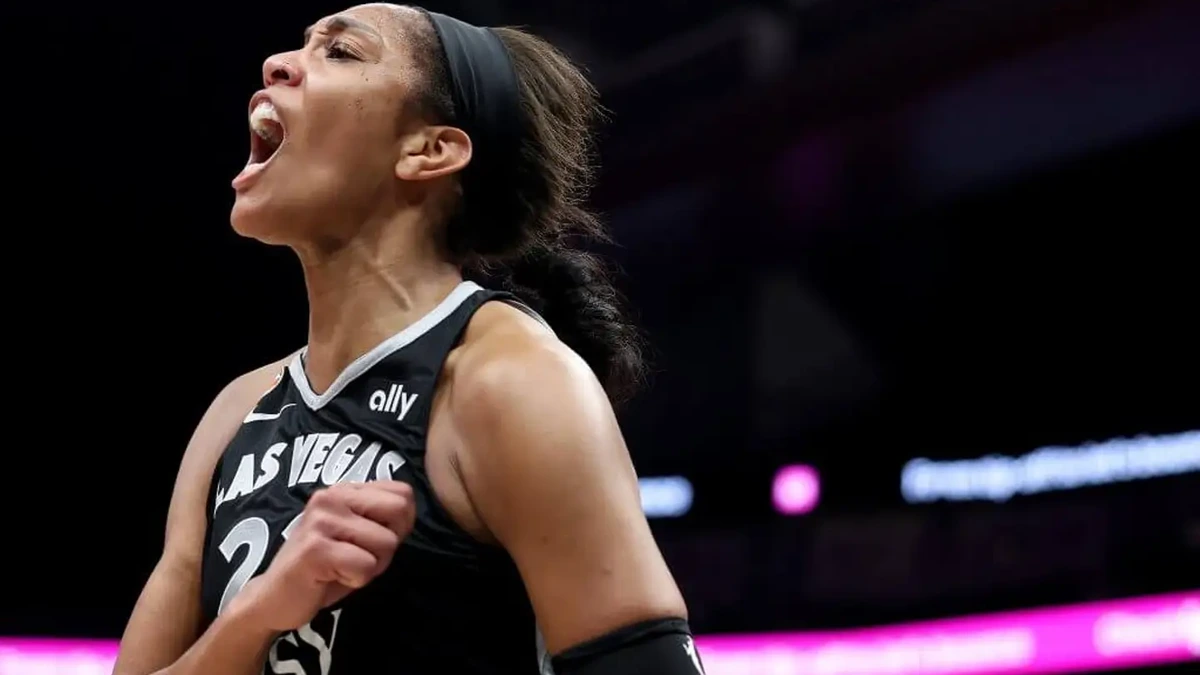
According to ESPN, Wilson received 65 of the 74 first-place votes, finishing ahead of Olivia Miles and Kelsey Mitchell, who placed second and third, respectively. Caitlin Clark finished fourth in the voting, followed by Breanna Stewart. Wilson previously won the award in 2020, 2022, 2024 and 2025, and now holds the league record with five MVP honors.
The 2026 season offered another example of Wilson’s dominance. The 30-year-old averaged a league-leading 26.2 points per game while shooting 52.7% from the field. She also averaged 9.4 rebounds and 1.9 blocks, leading the WNBA in the latter category. Her scoring average was the second-highest in league history, trailing only the record she established two seasons earlier.
Wilson also became the first player in WNBA history to average at least 25 points while shooting 50% from the field and 40% from three-point range. Despite dealing with back issues during the season, she appeared in 41 of Las Vegas’ 44 games and averaged 32 minutes per contest.
Her latest MVP places her in select company in professional sports. Wilson now shares the distinction of winning five regular-season MVP awards with NBA legends Michael Jordan and Bill Russell, as well as former NFL quarterback Peyton Manning. Within the WNBA, she has surpassed Sheryl Swoopes, Lisa Leslie and Lauren Jackson, who each won the award three times.
Since the Aces selected her with the first overall pick in the 2018 WNBA Draft, Wilson has helped establish Las Vegas as one of the league’s premier franchises. She has led the organization to three championships, including titles in 2022, 2023 and 2025, and earned two WNBA Finals MVP awards.
The former University of South Carolina standout continues to deliver for the franchise that drafted her. Las Vegas finished the regular season with a 31-13 record, winning its final seven games to secure the third seed in the playoffs.
With five MVP awards and three WNBA championships already to her name, Wilson continues to build a career that will be remembered for generations.

Nationally Syndicated Shows
Spend your Saturday with nationally recognized gospel personalities, uplifting music, artist interviews, inspiration and faith-centered entertainment on The Gospel Nashville.
 Nationally Syndicated
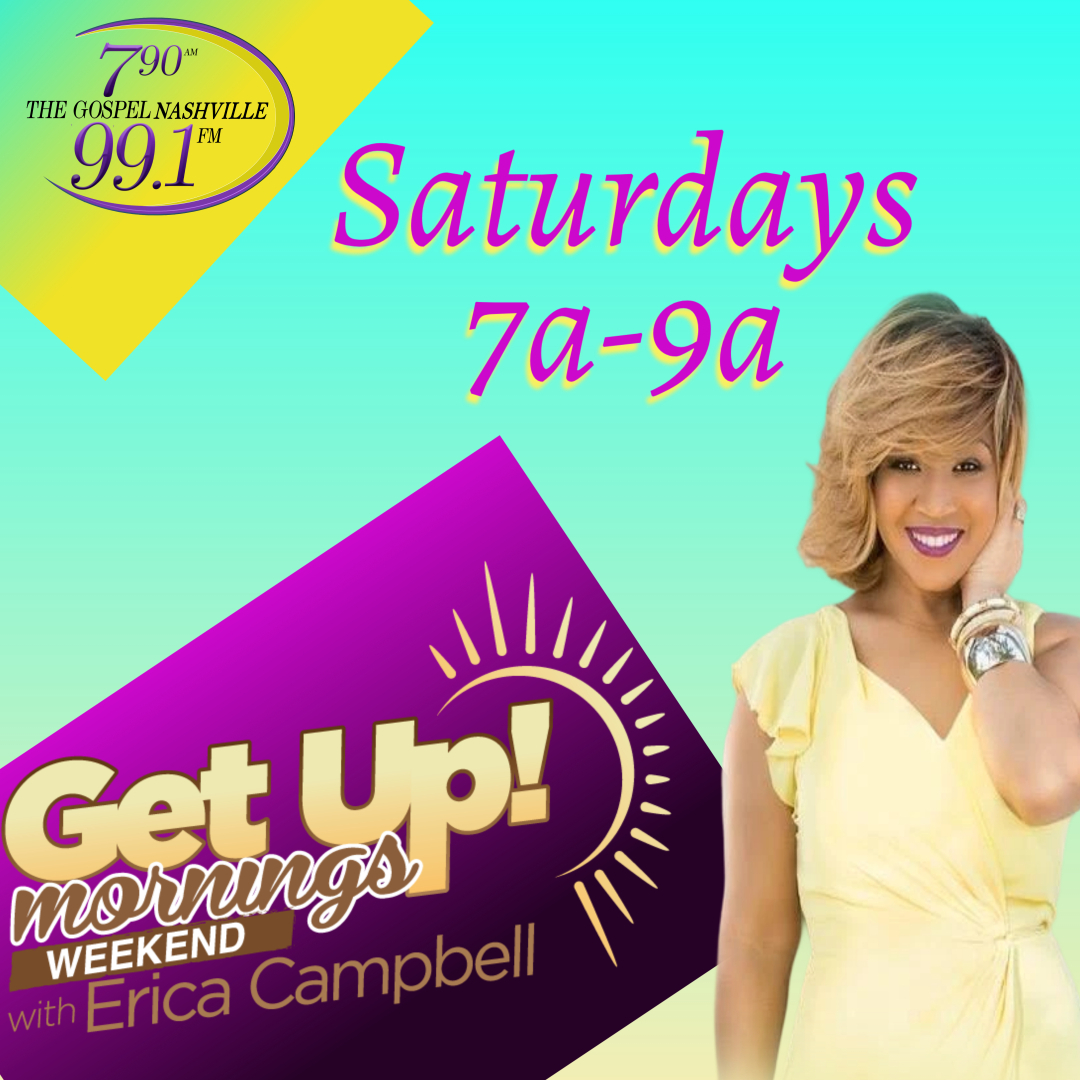
Get Up! Mornings with Erica Campbell
Saturdays • 7:00–9:00 AMStart Saturday with uplifting gospel music, encouragement, celebrity conversations and the energetic inspiration of Erica Campbell.
Listen Saturday Morning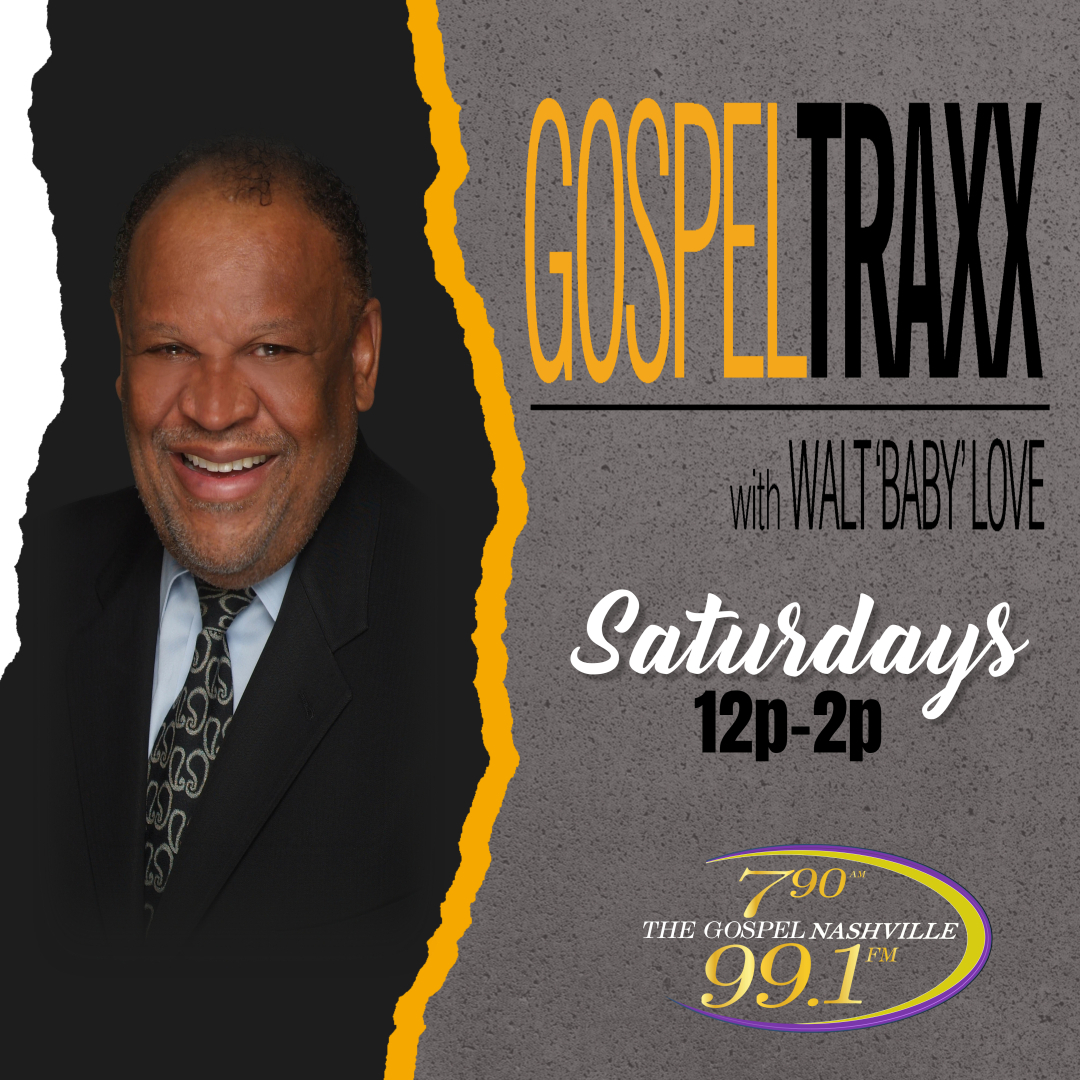 Nationally Syndicated
Gospel Traxx with Walt “Baby” Love
Saturdays • 12:00–2:00 PMEnjoy gospel favorites, artist features and the unmistakable voice and broadcasting legacy of Walt “Baby” Love.
Listen Saturday Afternoon Nationally Syndicated
The Marvin Sapp Radio Show
Saturdays • 3:00–5:00 PMHear uplifting music, meaningful conversation and inspiration from celebrated gospel artist and pastor Marvin Sapp.
Listen Saturday AfternoonVideo of the Week
Enjoy this week’s featured gospel performance, inspirational interview, ministry message or community spotlight selected by The Gospel Nashville.
Churches, artists, ministries and community organizations may submit a video for future consideration.